


How Many CCTV Cameras Do I Need for My Property?
One of the most common questions when planning a new security system is:
“How many CCTV cameras do I need?”
The answer depends on much more than simply the size of your property. Factors such as building layout, entry points, valuable assets, lighting conditions, and the level of detail you need from your recordings all play an important role.
Installing too few cameras can leave blind spots that compromise security, while installing too many may increase costs without providing any additional benefit.
The key is achieving complete CCTV coverage with the right cameras, positioned in the right locations.
Here’s what you should consider when planning your CCTV system.
What Determines How Many CCTV Cameras You Need?
Every property is different, but there are several key factors that will influence the number of cameras required.
These include:
✔ The size of your property
✔ The number of entrances and exits
✔ Indoor and outdoor areas requiring coverage
✔ High-value assets or restricted areas
✔ Lighting conditions
✔ Whether you need general monitoring or detailed identification
✔ Future expansion plans
For example, a small retail shop will have very different security requirements compared to a warehouse, school, office building, or industrial site.
Identify Your Priority Areas
Before choosing cameras, walk around your property and identify the areas that are most important to protect.
Common locations include:
✔ Main entrances and exits
✔ Driveways and car parks
✔ Reception areas
✔ Warehouses and storage rooms
✔ Loading bays
✔ Perimeter fencing and gates
✔ High-value equipment and assets
✔ Fire exits and emergency access points
Covering these areas first will help determine the minimum number of CCTV cameras your property requires.
💡 Tip: Every entry point into your property should usually be monitored by at least one camera.
Home CCTV vs Business CCTV
The number of cameras required can vary significantly depending on whether you’re securing a residential or commercial property.
Residential Properties
A typical home may require between 3 and 6 CCTV cameras, depending on its layout.
Common locations include:
- Front door
- Driveway
- Rear garden
- Side access
- Garage
Commercial Properties
Businesses often require more comprehensive CCTV coverage.
Additional cameras may be needed for:
- Reception areas
- Offices
- Warehouses
- Loading bays
- Car parks
- Stock rooms
- Staff entrances
- Perimeter fencing
Larger commercial premises can require anywhere from 8 to 30+ cameras, depending on the site’s size and security requirements.
Choosing the Right Camera Type
The type of CCTV camera you choose can affect how many cameras are needed.
Turret Cameras
Turret cameras are ideal for general surveillance and are commonly installed around entrances, offices, retail spaces, and building exteriors.
Bullet Cameras
Bullet cameras are designed for longer viewing distances and are often used for perimeter protection, car parks, and larger outdoor spaces.
Their highly visible design can also act as a deterrent to potential intruders.
PTZ Cameras
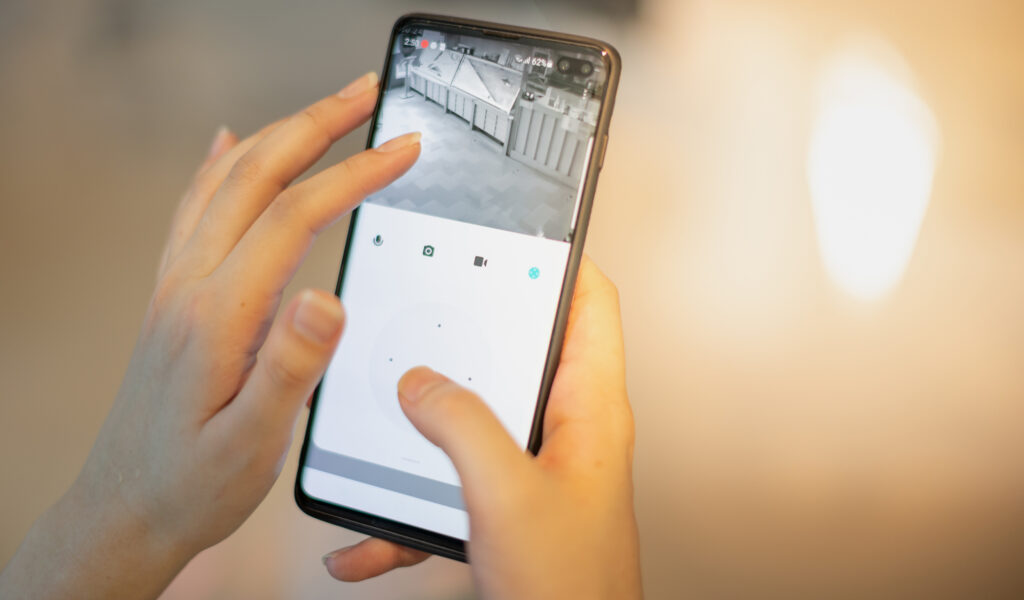
PTZ (Pan-Tilt-Zoom) cameras can be remotely controlled to pan, tilt, and zoom across large areas.
In some situations, a single PTZ camera can monitor areas that would otherwise require several fixed cameras, making them ideal for warehouses, industrial sites, construction sites, and logistics facilities.
Active Deterrence Cameras
Active deterrence cameras go beyond traditional surveillance by helping to prevent incidents before they happen. Using features such as flashing warning lights, built-in speakers, and intelligent analytics, they can actively discourage intruders while capturing high-quality footage.
They are ideal for warehouses, construction sites, business premises, and other high-security environments.
Fisheye Cameras
Fisheye cameras provide an ultra-wide field of view, allowing a single camera to monitor large open areas that might otherwise require multiple fixed cameras.
They’re commonly used in retail stores, offices, schools, reception areas, and other indoor environments where broad coverage is essential.
Panoramic Cameras
Panoramic cameras use multiple lenses or sensors to deliver seamless wide-area coverage with exceptional image quality. They are ideal for monitoring large spaces such as warehouses, shopping centres, car parks, and public areas, helping to reduce blind spots while minimising the number of cameras required.
💡 Tip: Choosing the right camera type can often reduce the total number of cameras needed while still achieving excellent CCTV coverage.
Camera Resolution Matters Too
The number of cameras isn’t the only consideration.
Higher-resolution cameras can often capture greater detail across larger areas.
For example:
✔ 2MP cameras are ideal for general monitoring.
✔ 4MP cameras provide enhanced image quality and improved identification.
✔ 8MP (4K) cameras offer exceptional detail and may reduce the number of cameras required by covering larger areas more effectively.
Choosing the right resolution can help maximise coverage while maintaining excellent image quality.
Avoid Blind Spots
One of the biggest mistakes when designing a CCTV system is focusing only on entrances while overlooking the spaces between cameras.
To reduce blind spots, consider:
✔ Camera viewing angles
✔ Building corners
✔ Trees and landscaping
✔ Shelving or stored equipment
✔ Lighting conditions
✔ Future building extensions
Creating overlapping fields of view helps ensure there are no gaps in your surveillance coverage.
So, How Many CCTV Cameras Do You Really Need?
There isn’t a single answer that suits every property.
The right number of CCTV cameras depends on your property’s layout, security objectives, camera placement, and the level of detail you need from your recordings.
A well-designed CCTV system isn’t about installing as many cameras as possible – it’s about achieving complete, effective coverage with the right combination of cameras and technology.
Whether you’re protecting a home, office, warehouse, school, retail premises, or industrial site, careful planning will ensure your CCTV system performs when it matters most.
If you’re unsure how many CCTV cameras your property needs, the Genie team can help assess your requirements and recommend the most suitable cameras, recorders, and accessories for your installation.